Table of Contents
⦁ Understanding Payroll Software
⦁ Exploring Outsourced Payroll Services
⦁ Cost Comparison
⦁ Compliance and Risk Management
⦁ Time and Resource Management
⦁ Scalability and Flexibility
⦁ Making the Right Choice for Your Business
⦁ Conclusion
Efficient payroll management is fundamental to any successful business, ensuring both compliance and employee satisfaction. With a wide range of options available, business owners often grapple with choosing between payroll software and outsourcing payroll functions to third-party providers. Understanding the distinctions, benefits, and potential challenges of each approach can empower companies to make the right decision for their needs. If you are starting to evaluate payroll tools, you can review industry recommendations and vendor lists, such as the 5 best payroll software providers for small businesses in 2026, in https://www.adp.com/resources/articles-and-insights/articles/t/the-6-best-payroll-software-providers-for-small-businesses-in-2024.aspx to get a thorough overview of the market. Every business faces unique payroll needs, depending on its size, complexity, and growth trajectory. While some advantage may be gained in keeping payroll management in-house, many organizations seek to streamline operations through outsourcing. The right payroll solution can help companies keep accurate records, stay compliant, and avoid penalties, all while freeing internal resources to focus on business growth. Making the right choice involves more than just comparing costs; it requires a careful evaluation of time, risk, scalability, and resource allocation.
Understanding Payroll Software
Payroll software puts essential payroll tools directly into the hands of business owners or their HR departments, offering a streamlined way to manage compensation and benefits. These platforms automate wage calculation, tax withholding, and benefits administration, significantly reducing the risk of human error while ensuring timely, accurate payments. Many modern payroll solutions seamlessly integrate with accounting systems, time-tracking tools, and HR management platforms, enabling businesses to synchronize data across functions for greater efficiency and transparency. Cloud-based technology further enhances accessibility, enabling managers and employees to securely access payroll information from any location, at any time. Real-time updates ensure compliance with the latest federal, state, and local regulations, while automated notifications help track deadlines, submissions, and audits. By centralizing payroll processes and reducing administrative overhead, these platforms free up valuable time, allowing businesses to focus on strategic growth, employee engagement, and long-term operational success.
Exploring Outsourced Payroll Services
Outsourced payroll services shift payroll responsibilities to specialized providers who manage the entire process. These professionals handle payroll calculations, pay distribution, tax filings, and year-end reporting for the business. Outsourcing can significantly reduce the administrative burden on in-house teams while providing access to expert knowledge, particularly as regulations shift at the federal, state, and local levels. Many providers offer tailored solutions for a range of industries and business sizes, from startups to established enterprises. In addition to day-to-day payroll, outsourcing companies often deliver strategic services such as compliance monitoring and labor cost analysis, helping businesses avoid expensive mistakes and keep pace with regulatory changes.
Cost Comparison
Budget considerations often drive payroll decision-making. Payroll software is generally priced on a subscription model, making it accessible to small and midsize businesses seeking predictable monthly costs. Upfront fees may apply, but the ongoing expenses are often lower than those for hiring dedicated payroll staff. Outsourced payroll, on the other hand, is typically priced per employee or as a percentage of total payroll processed, making it a flexible yet sometimes higher recurring expense for larger companies. Outsourcing can reduce internal staffing costs; however, it eliminates the need to employ full-time payroll administrators or HR professionals to handle complex payroll cycles.
Compliance and Risk Management
Payroll compliance poses a significant challenge for businesses of all sizes. Wage and hour laws, tax rules, and benefits regulations can change frequently, creating exposure to risk. Payroll software solutions often receive periodic updates to address new laws, but the final responsibility for compliance rests with the business owner or HR department. In contrast, outsourcing payroll shifts much of the compliance responsibility to the provider, reducing risk and potential liability. These firms employ dedicated experts who proactively monitor regulatory changes, update systems, and handle all necessary filings to help prevent costly penalties and audits.
Time and Resource Management
Managing payroll internally, even with powerful software, requires a significant time investment. HR specialists or business owners must dedicate time to data entry, audits, and troubleshooting issues such as pay discrepancies or tax questions. For small businesses, especially, this can detract from time spent on revenue-generating activities. Outsourcing payroll immediately frees up this time and reallocates resources to growth-oriented tasks, allowing leaders to invest more energy in strategic planning, employee engagement, and service delivery.
Scalability and Flexibility
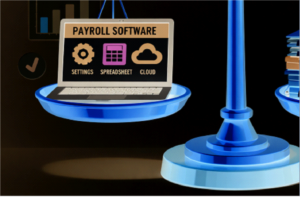
As businesses expand, their payroll needs inevitably become more complex. Software packages support scaling through add-on modules for benefits, time tracking, and compliance, enabling organizations to purchase additional features as their workforce grows. Outsourced payroll services, by contrast, are inherently scalable, quickly adapting to new headcounts and jurisdictions with minimal disruption. The flexibility to scale up or down can be a deciding factor for businesses experiencing rapid growth or seasonal fluctuations in staff.
Making the Right Choice for Your Business
Selecting between payroll software and outsourcing comes down to a careful review of your business’s priorities. Small businesses with simple payroll systems may benefit from a cost-effective software solution that provides control and transparency. Larger organizations or those with distributed workforces and multi-jurisdictional tax needs are likely to benefit from expert-managed outsourcing. Regularly reassessing your business’s size, capacity, and regulatory challenges will ensure that your payroll solution continues to meet your needs as your business evolves.
Conclusion
Choosing the right payroll solution is a strategic decision that impacts accuracy, compliance, and overall business efficiency. Whether opting for in-house payroll software or outsourcing to specialized providers, organizations must weigh factors such as cost, scalability, risk management, and time allocation. Payroll software offers control, automation, and seamless integration with existing systems, making it ideal for businesses seeking transparency and efficiency. Outsourced services provide expert guidance, reduced administrative burden, and enhanced compliance support, especially valuable for growing or multi-location businesses. Ultimately, the best approach aligns with your company’s size, resources, and long-term growth objectives. By carefully evaluating your options and regularly reassessing your payroll needs, you can ensure that your payroll processes remain accurate, compliant, and adaptable, freeing your team to focus on strategic initiatives that drive business success.
Related Posts

ReadMyManga Com: A Hidden Gem Turned Global Manga Hub
The popularity of digital manga platforms has grown significantly in…
Rosboxar: The Full Guide to Its Features, Benefits & Growing Popularity in 2026
The emergence of rosboxar has captured attention across digital communities,…

Acamento: A Perfect Smart Learning Network for Skill Growth & Career Success
Acamento is rapidly emerging as a powerful name in the…